
tldr;
I spend way too much time talking about coding on phones and video glasses.
First, I reminisce
A long long time ago - 2007, before the first of many once-in-a-lifetime economic meltdowns I’ve gotten to enjoy - I was blown away at a $300 price tag on a laptop that promised to be able to fit into your pocket. At least if you were a… shall we say larger gentleman. The eee PC 900 from Asus is what kicked off the netbook - an initial surge of cheap portable compute that can be blamed for a lot of directions taken in modern tech, even nearly 20 years later. The initial netbook push resulted in a cascade of poor quality laptops causing Microsoft to so badly lose on perceptions of quality against Apple. Microsoft would have still screwed it up without this - trust me - but this era did not help.
But that eee PC… it was a piece of tech that came with me everywhere. Class, long nights in the lab trying to figure out why my robotics course work refused to work, the library while I coded out some homework… it was a life changing joy to use as a college student.
If this makes little sense to you, I should also mention - the iPhone was originally released that year, and the first Android phone, the T-Mobile G1, a year later. College students had cheap Nokia or Eriksson phones. Motorola Razrs were the pricy super-cool ones. No one had “smart” phones as we consider them today.
What I loved about it was the very concept of being able to code or work on tech anywhere. It seemed to be a leap towards a cyberpunk technofueled existence that I so wrongly hoped for and unfortunately received. We didn’t yet see what the mobile phone would become.
As tempting as nostalgia can be, I know better than to try and acquire one again. Don’t get me wrong - I’ve looked on eBay, for instance, on more than one occasion for it or other portable laptops of old (the Psion 5). There’s no shot that I’d last more than mere minutes before throwing my hands up in disgust. Not that I’ve debated converting their shells into modern laptops…
That initial transition from a big bulky laptop to something truly pocketable… that was magic.
Are XR glasses the next form factor?
There’s plenty of companies willing to sell you on the idea of a new platform. They’re all hungry to invent something that will cause a rush of consumer purchasing frenzy a-la the smart phone gold rush of the 2010s. So far we’ve had voice controlled AI pins that barely worked, AI camera-equipped glasses that are rightfully being labeled creepy, AI necklaces that provide concerning parasocial relationships… They’re all terrible. Well, mostly.
XR glasses though… that has some potential.
Unfortunately the term is highly overloaded. When I say “XR glasses” I’m specifically talking about spatially aware glasses/goggles with a first class form of pass through. For clarification:
Voice interface- AI glasses with no display, camera or no.- Agents can be great with a voice interface, but are too costly to make the general use case for these products; the agents these are paired with kind of suck as a result. The result is a toy demo that isn’t great beyond “tell me what I’m looking at” or “summarize my notifications” which is no better than just having visible notifications.
Video glasses- Stuff like the XReal xbx a01. No interaction, just a new kind of compact portable screen. Far too many of these try to market themselves as AR/XR devices. More on these later.VR- virtual reality headsets without first class pass through. If you’ve used pass through on older VR headsets or the Meta Quests you know it’s just not usable long term, either through poor quality, monocular / no-depth-perception, or lack of FOV.XR goggles- your Apple Vision Pro or your Samsung Galaxy XR.XR glasses- natural pass through/ not a screen with display overlay- Unfortunately there’s even further division by capability. 3 DoF vs full 6DoF, spatial and hand tracking, eye tracking - all of which will dramatically change what’s possible and how the experience plays out.
The reason for the confusion is two fold. Marketing, because marketing is an awful profession ran by awful people, and that we just haven’t narrowed down the product yet. Think back to the days of crazy cell phones.
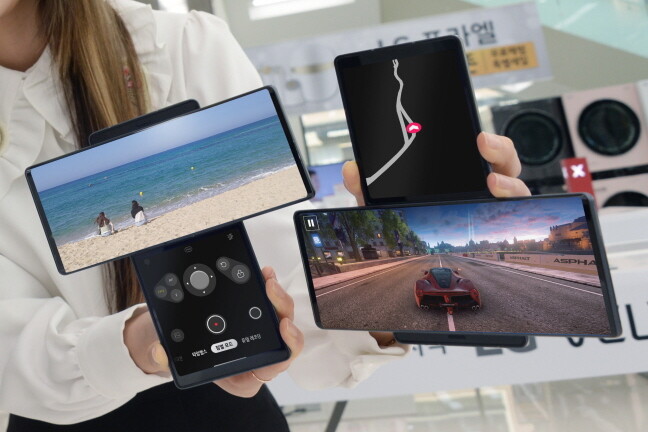
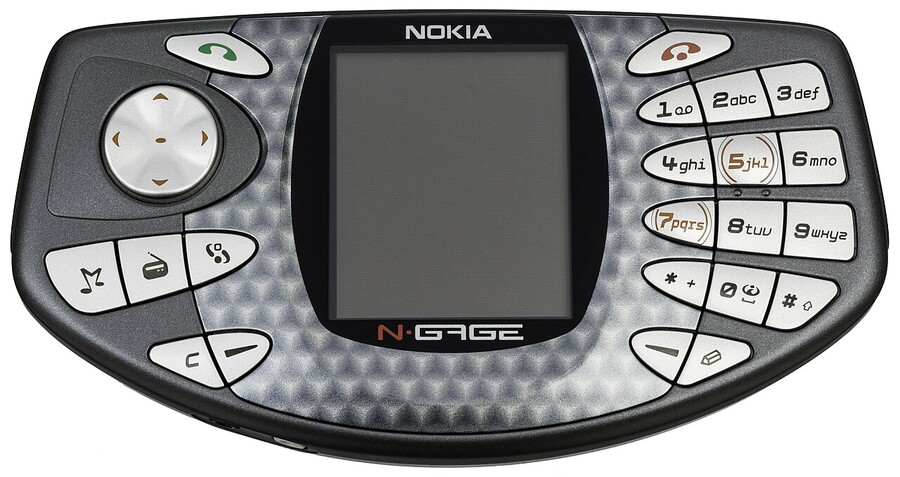
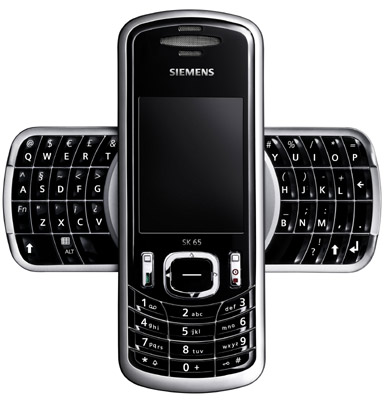
We zeroed in on the most efficient and desirable form factor for the majority of people. The difference between phones are largely specs, which most people don’t understand. XR glasses are nowhere near an established design, beyond the initial form factor given glasses are an established design.
Oops, I love them
I picked up a pair of XReal xbx a01’s - at the time XReal’s cheapest glasses. It provides no spatial tracking beyond some form of an IMU “delayed floating” to prevent motion sickness; something about the projected screen not moving like an object causes our inner ears to go crazy.
My intention was to purchase it, test-run it during an upcoming business trip overseas (a 14 hour flight and far too much time waiting in airports), and return it when it invariably disappoints. I ended up loving the damned thing. The pitched private “100 inch screen” isn’t quite right, but it’s not too far off. Working on the laptop on the plane - and later a robotics lab workbench - meant I never had issue with screen size. Text was surprisingly clear (though it required the $50 tax of their prescription lenses) and I didn’t really experience any headaches from it.
Coding on a phone
Where it got interesting was Samsung DeX[1], even with my older phone (an S21 in ‘26, since there’s just no need to update and the nearly $2k price tags don’t make me want to move on to another phone). The problem with dex before was that having access to a monitor and keyboard/mouse meant I almost certainly had access to a laptop/computer, which is a far superior setup. The glasses unlocked a light weight “anywhere” monitor (if you are willing to dedicate a jacket pocket to its case).
I immediately experimented with wireless pocket keyboards. Every single one was terrible. I landed on the “least terrible” which also provided a touchpad - though the phone can double as a touchpad when DeX is active. I landed on this one, which is clearly white labeled and exists under 30 brand names with too many or too few vowels that won’t exist in three months. It is tolerable. Mostly.
(A tangent amongst a post of tangents: When XR glasses take off we will finally enter an era where a good folding keyboard will be made). For the love of soothing thomps will someone please develop mechanical key folding keyboard.
To get coding to work, I tried a few options - Breadstick Linux for Debian apps could get VS Code running (which is also a great DeX alternative for non Samsung Android phones); same for Termux:X11 which runs its own X server. In the end I found it most useful to use Tailscale to dial back to my home network and use a VS code-server. That paired with some Codex instances, and some additional NAS volume syncing led to a workable solution.
I wouldn’t quite agree that we are yet able to use a phone as a full laptop. Even if the applications were more reliable, the pain of remote dev tools and file access solved, and someone sells a decent folding keyboard, there is no avoiding the pain in the ass of too many wires, awkward setup time, awkward get-up-and-go time, and of course, looking like a fucking dork.
To those that would say that since we’re all agentic coding anyway, we don’t really need keyboards anymore. I’m still a stickler for keyboards for quickly conveying what I want clearly. Though if you want to see a cool implementation of this with amore casual “AI glasses”, check this dev’s approach.
So we’re not there yet. I’m developing some custom tools for my newly acquired XReal Aura glasses that might push us a little closer to the dream.